Maroon Clownfish (Premnas Biaculeatus)
Maroon Clownfish (Premnas biaculeatus)
The Maroon Clownfish is the largest, most aggressive, and arguably the most striking member of the anemonefish subfamily. Unlike the common "Nemo" (Ocellaris), the Maroon belongs to its own genus (Premnas) and is famous for the sharp spines on its cheeks. While it is incredibly hardy and beautiful, it is often called the "King of Clownfish" because of its fierce territoriality.
Key Information
-
Common Names: Maroon Clownfish, Spine-cheek Clownfish, Gold Stripe Maroon
-
Scientific Name: Premnas biaculeatus
-
Origin: Indo-Pacific (Indonesia, Philippines, Solomon Islands)
-
Max Size: 15–17 cm (approx. 6 inches) — Females are much larger than males.
-
Lifespan: 10–15+ years
-
Temperament: Highly Aggressive; extremely territorial
-
Diet: Omnivore – Eagerly accepts all aquarium foods
-
Care Level: Very Easy (Hardy)
Appearance & Identification
The Maroon Clownfish has a distinct, "velvety" look:
-
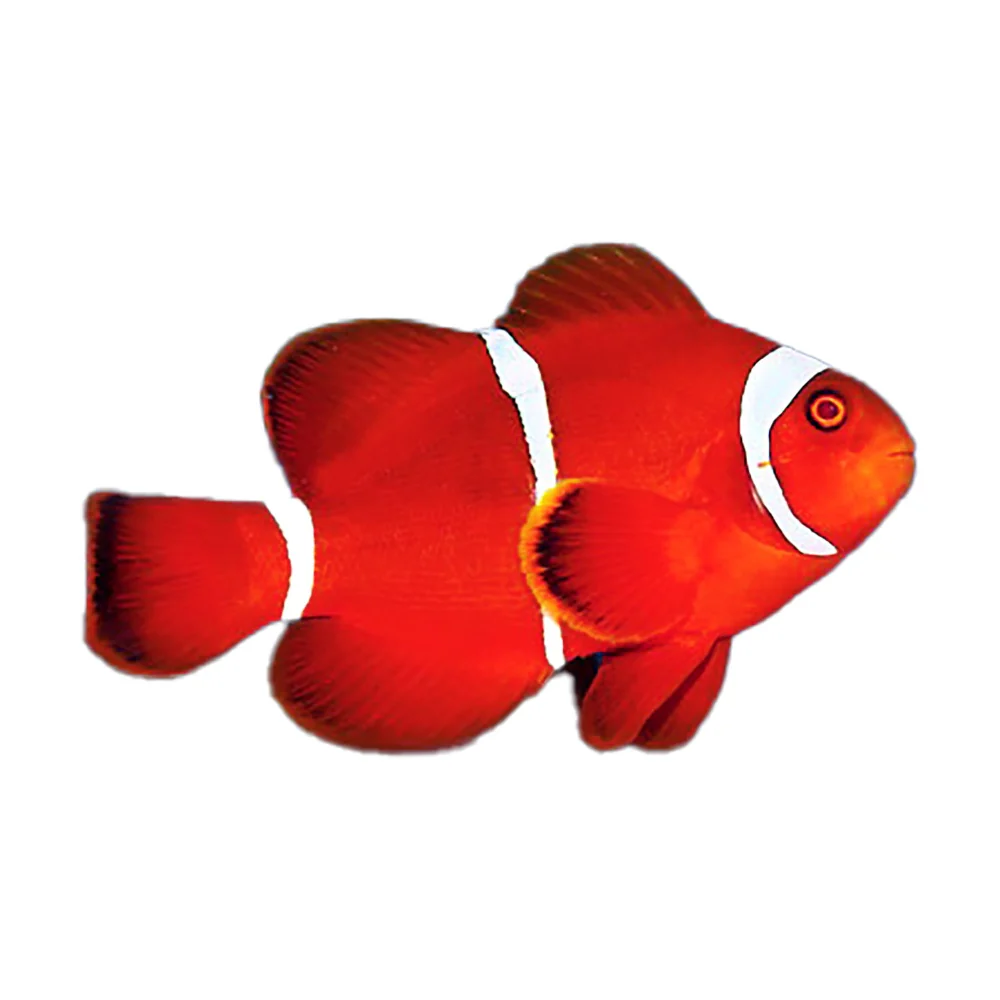
The Color: Deep, burgundy-to-maroon body color.
-
The Stripes: Features three thin white bands. In the popular Gold Stripe Maroon (GSM) variety (often from Sumatra), these stripes turn a brilliant metallic gold as the fish matures.
-
The Cheek Spines: If you look closely at the gill cover (operculum), you will see two prominent, sharp spines. These are used for defense and can easily get tangled in fish nets.
-
Sexual Dimorphism: This species has the most extreme size difference in the clownfish world. The female is massive and dark, while the male is often 1/3 the size and remains a brighter red.
Behaviour & Tank Compatibility
-
The "Bull" of the Reef: Maroon Clownfish are notorious for moving sand and small rocks to suit their preferences. They will literally "bite" the hand that feeds them if you reach into their territory.
-
Anemone Preference: Their natural host is the Bubble Tip Anemone (Entacmaea quadricolor). They are very protective of their host and will chase away much larger fish that get too close.
-
Social Structure: Do not keep two Maroons together unless they are a bonded pair. Two females will fight to the death. Introducing a tiny male to a large female is a delicate process.
-
Tank Mates: Best kept with similarly assertive fish like Tangs, large Angelfish, or Dottybacks. Avoid keeping them with peaceful fish like Firefish or small Gobies, as the Maroon may bully them.
Ideal Tank Setup
-
Tank Size: A minimum of 115L (30 Gallons) for a single fish, but 200L (55 Gallons) is recommended for a pair, especially if they have an anemone.
-
Stable Rockwork: Because they are "earthmovers," ensure your rockwork is secure. They have been known to knock over un-secured corals or move rubble around.
-
Nets Warning: Avoid using standard mesh nets. The cheek spines will get stuck, causing stress and potential injury. Use a plastic container or a fine-mesh "silk" net if you must move them.
-
Reef Safe: Yes, though their habit of fanning sand can sometimes irritate corals placed on the substrate.
Dietary Needs
They are not picky and have a high metabolism:
-
Feeding: Provide a mix of meaty frozen foods (mysis, brine shrimp) and algae-based flakes or pellets.
-
Frequency: Feed 1–2 times daily.
Why Choose the Maroon Clownfish?
The Maroon Clownfish is for the hobbyist who wants a fish with a "big" personality. They are incredibly hardy and make a massive visual impact, especially the Gold Stripe variety. If you are looking for a centerpiece fish for a 100–200L tank and don't mind a bit of "redecorating" and aggression, the Maroon is one of the most rewarding and long-lived inhabitants you can own.
Maroon Clownfish (Premnas biaculeatus)
The Maroon Clownfish is the largest, most aggressive, and arguably the most striking member of the anemonefish subfamily. Unlike the common "Nemo" (Ocellaris), the Maroon belongs to its own genus (Premnas) and is famous for the sharp spines on its cheeks. While it is incredibly hardy and beautiful, it is often called the "King of Clownfish" because of its fierce territoriality.
Key Information
-
Common Names: Maroon Clownfish, Spine-cheek Clownfish, Gold Stripe Maroon
-
Scientific Name: Premnas biaculeatus
-
Origin: Indo-Pacific (Indonesia, Philippines, Solomon Islands)
-
Max Size: 15–17 cm (approx. 6 inches) — Females are much larger than males.
-
Lifespan: 10–15+ years
-
Temperament: Highly Aggressive; extremely territorial
-
Diet: Omnivore – Eagerly accepts all aquarium foods
-
Care Level: Very Easy (Hardy)
Appearance & Identification
The Maroon Clownfish has a distinct, "velvety" look:
-
The Color: Deep, burgundy-to-maroon body color.
-
The Stripes: Features three thin white bands. In the popular Gold Stripe Maroon (GSM) variety (often from Sumatra), these stripes turn a brilliant metallic gold as the fish matures.
-
The Cheek Spines: If you look closely at the gill cover (operculum), you will see two prominent, sharp spines. These are used for defense and can easily get tangled in fish nets.
-
Sexual Dimorphism: This species has the most extreme size difference in the clownfish world. The female is massive and dark, while the male is often 1/3 the size and remains a brighter red.
Behaviour & Tank Compatibility
-
The "Bull" of the Reef: Maroon Clownfish are notorious for moving sand and small rocks to suit their preferences. They will literally "bite" the hand that feeds them if you reach into their territory.
-
Anemone Preference: Their natural host is the Bubble Tip Anemone (Entacmaea quadricolor). They are very protective of their host and will chase away much larger fish that get too close.
-
Social Structure: Do not keep two Maroons together unless they are a bonded pair. Two females will fight to the death. Introducing a tiny male to a large female is a delicate process.
-
Tank Mates: Best kept with similarly assertive fish like Tangs, large Angelfish, or Dottybacks. Avoid keeping them with peaceful fish like Firefish or small Gobies, as the Maroon may bully them.
Ideal Tank Setup
-
Tank Size: A minimum of 115L (30 Gallons) for a single fish, but 200L (55 Gallons) is recommended for a pair, especially if they have an anemone.
-
Stable Rockwork: Because they are "earthmovers," ensure your rockwork is secure. They have been known to knock over un-secured corals or move rubble around.
-
Nets Warning: Avoid using standard mesh nets. The cheek spines will get stuck, causing stress and potential injury. Use a plastic container or a fine-mesh "silk" net if you must move them.
-
Reef Safe: Yes, though their habit of fanning sand can sometimes irritate corals placed on the substrate.
Dietary Needs
They are not picky and have a high metabolism:
-
Feeding: Provide a mix of meaty frozen foods (mysis, brine shrimp) and algae-based flakes or pellets.
-
Frequency: Feed 1–2 times daily.
Why Choose the Maroon Clownfish?
The Maroon Clownfish is for the hobbyist who wants a fish with a "big" personality. They are incredibly hardy and make a massive visual impact, especially the Gold Stripe variety. If you are looking for a centerpiece fish for a 100–200L tank and don't mind a bit of "redecorating" and aggression, the Maroon is one of the most rewarding and long-lived inhabitants you can own.
Description
Maroon Clownfish (Premnas biaculeatus)
The Maroon Clownfish is the largest, most aggressive, and arguably the most striking member of the anemonefish subfamily. Unlike the common "Nemo" (Ocellaris), the Maroon belongs to its own genus (Premnas) and is famous for the sharp spines on its cheeks. While it is incredibly hardy and beautiful, it is often called the "King of Clownfish" because of its fierce territoriality.
Key Information
-
Common Names: Maroon Clownfish, Spine-cheek Clownfish, Gold Stripe Maroon
-
Scientific Name: Premnas biaculeatus
-
Origin: Indo-Pacific (Indonesia, Philippines, Solomon Islands)
-
Max Size: 15–17 cm (approx. 6 inches) — Females are much larger than males.
-
Lifespan: 10–15+ years
-
Temperament: Highly Aggressive; extremely territorial
-
Diet: Omnivore – Eagerly accepts all aquarium foods
-
Care Level: Very Easy (Hardy)
Appearance & Identification
The Maroon Clownfish has a distinct, "velvety" look:
-
The Color: Deep, burgundy-to-maroon body color.
-
The Stripes: Features three thin white bands. In the popular Gold Stripe Maroon (GSM) variety (often from Sumatra), these stripes turn a brilliant metallic gold as the fish matures.
-
The Cheek Spines: If you look closely at the gill cover (operculum), you will see two prominent, sharp spines. These are used for defense and can easily get tangled in fish nets.
-
Sexual Dimorphism: This species has the most extreme size difference in the clownfish world. The female is massive and dark, while the male is often 1/3 the size and remains a brighter red.
Behaviour & Tank Compatibility
-
The "Bull" of the Reef: Maroon Clownfish are notorious for moving sand and small rocks to suit their preferences. They will literally "bite" the hand that feeds them if you reach into their territory.
-
Anemone Preference: Their natural host is the Bubble Tip Anemone (Entacmaea quadricolor). They are very protective of their host and will chase away much larger fish that get too close.
-
Social Structure: Do not keep two Maroons together unless they are a bonded pair. Two females will fight to the death. Introducing a tiny male to a large female is a delicate process.
-
Tank Mates: Best kept with similarly assertive fish like Tangs, large Angelfish, or Dottybacks. Avoid keeping them with peaceful fish like Firefish or small Gobies, as the Maroon may bully them.
Ideal Tank Setup
-
Tank Size: A minimum of 115L (30 Gallons) for a single fish, but 200L (55 Gallons) is recommended for a pair, especially if they have an anemone.
-
Stable Rockwork: Because they are "earthmovers," ensure your rockwork is secure. They have been known to knock over un-secured corals or move rubble around.
-
Nets Warning: Avoid using standard mesh nets. The cheek spines will get stuck, causing stress and potential injury. Use a plastic container or a fine-mesh "silk" net if you must move them.
-
Reef Safe: Yes, though their habit of fanning sand can sometimes irritate corals placed on the substrate.
Dietary Needs
They are not picky and have a high metabolism:
-
Feeding: Provide a mix of meaty frozen foods (mysis, brine shrimp) and algae-based flakes or pellets.
-
Frequency: Feed 1–2 times daily.
Why Choose the Maroon Clownfish?
The Maroon Clownfish is for the hobbyist who wants a fish with a "big" personality. They are incredibly hardy and make a massive visual impact, especially the Gold Stripe variety. If you are looking for a centerpiece fish for a 100–200L tank and don't mind a bit of "redecorating" and aggression, the Maroon is one of the most rewarding and long-lived inhabitants you can own.