Lionfish Fuzzy Dwarf (Dendrochirus Brachypterus)
Dwarf Fuzzy Lionfish (Dendrochirus brachypterus)
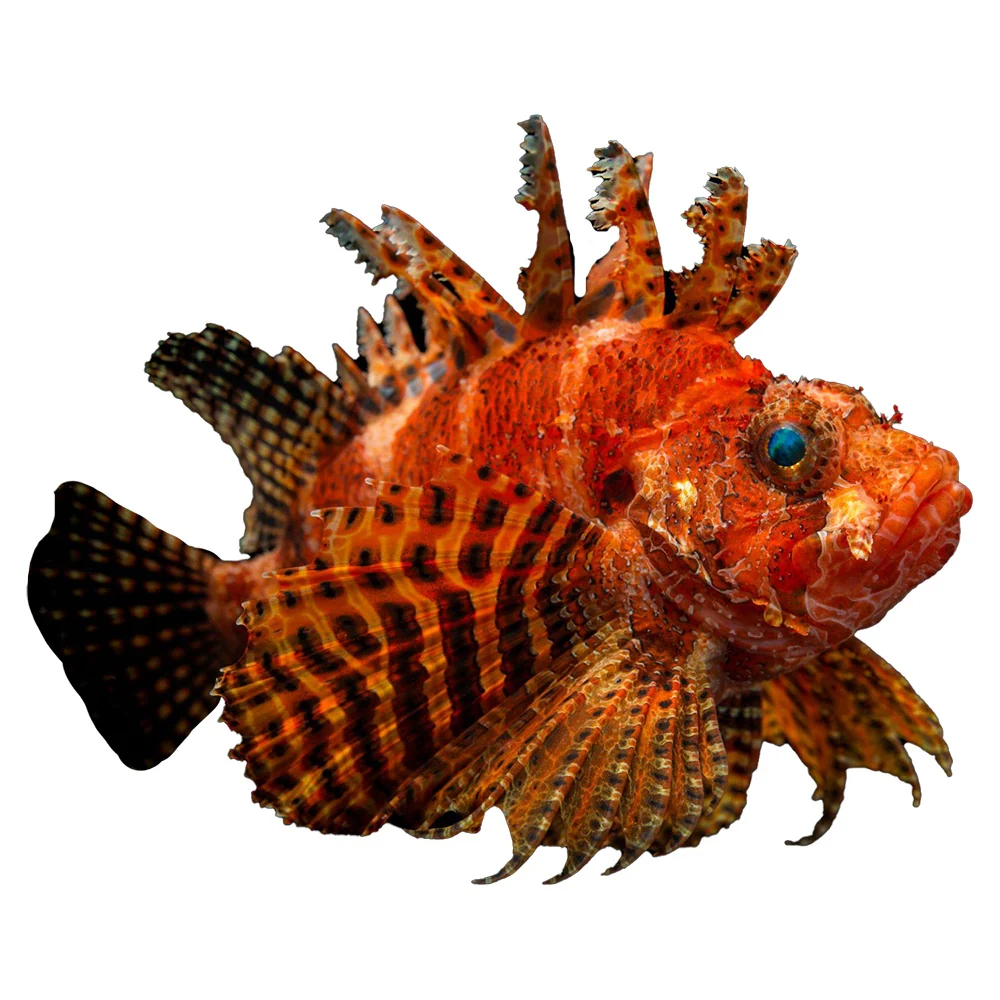
The Dwarf Fuzzy Lionfish is widely considered the most "personable" and popular of the dwarf lionfish species. While it shares the exotic, venomous beauty of its relatives, the "Fuzzy" is famous for its puppy-like behavior—often recognizing its owner and following them along the glass. It earns its name from the textured, leafy appendages on its fins and body that give it a "fuzzy" or ragged appearance, which is perfect for camouflage.
Key Information
-
Common Names: Dwarf Fuzzy Lionfish, Shortfin Lionfish
-
Scientific Name: Dendrochirus brachypterus
-
Origin: Indo-Pacific (Red Sea to Philippines and Indonesia)
-
Max Size: 13–15 cm (approx. 5–6 inches)
-
Lifespan: 10+ years
-
Temperament: Semi-aggressive (Peaceful toward fish it cannot swallow)
-
Diet: Carnivore – Ambush predator
-
Care Level: Moderate (due to feeding requirements)
Appearance & Identification
The Fuzzy Lionfish is easily distinguished from the Zebra Lionfish by its stockier build and fin structure:
-
The "Fuzzy" Texture: Its pectoral fins are not as "fan-like" as the Zebra's; they are shorter and more rounded, with ragged edges that look like feathers or leaves.
-
Color Morphs: Most are a mottled reddish-brown and white, but rare and highly sought-after Yellow Morphs occasionally appear in the trade.
-
Sexual Dimorphism: This is one of the few lionfish you can sex visually. Males typically have larger pectoral fins with more bands (usually 6–10), while females have smaller fins with fewer bands (usually 4–6).
Behaviour & Tank Compatibility
-
Owner Interaction: Unlike many ambush predators that hide, the Fuzzy is quite active once settled. They are known to "beg" for food and spend significant time in the open.
-
The "Mouth Rule": Like all lions, if a tank mate (fish or shrimp) can fit in its mouth, it is considered food. They can swallow fish surprisingly close to their own body size.
-
Reef Safe (with Caution): 100% safe with corals. However, they will eat all ornamental shrimp and small crabs.
-
Tank Mates: Excellent with larger Tangs, Foxfaces, and Angelfish. Avoid keeping them with aggressive "fin-nippers" (like some Damsels or Puffers) as the lionfish's long fins are an easy target for harassment.
Ideal Tank Setup
-
Tank Size: A minimum of 115L (30 Gallons) for a single specimen.
-
Rockwork: Provide plenty of overhangs and caves. They love to hang upside down from the "ceiling" of a cave during the day.
-
Filtration: Because they are "messy" eaters (high protein diet), a oversized protein skimmer is necessary to maintain water quality.
-
Substrate: They are comfortable with sand or bare bottoms, but sand is more natural for their environment.
Dietary Needs: The Feeding Transition
-
The Challenge: Most Fuzzies arrive only eating live food (ghost shrimp or feeder fish).
-
The Goal: Transition them to frozen meaty foods like mysis, krill, silversides, or chopped squid.
-
The Method: Use a clear acrylic feeding stick to wiggle frozen food in front of them. This mimics the movement of live prey and triggers their "strike" reflex.
-
Frequency: Feed 3–4 times a week. Do not overfeed, as lionfish have slow digestions and are prone to impaction if fed every day.
Safety Warning
[CAUTION] The spines of the Dwarf Fuzzy Lionfish contain a potent protein-based venom. A sting is extremely painful. Always keep track of where the fish is when placing your hands in the tank. If stung, soak the area in hot water (approx. 45°C) and seek medical advice.
Why Choose the Dwarf Fuzzy Lionfish?
The Fuzzy Dwarf is for the hobbyist who wants an interactive "pet" fish rather than just a decoration. Its unique texture and "bulldog" face make it incredibly endearing. For a medium-sized reef tank that doesn't house small shrimp, it is a hardy, long-lived centerpiece that never fails to impress guests.
Dwarf Fuzzy Lionfish (Dendrochirus brachypterus)
The Dwarf Fuzzy Lionfish is widely considered the most "personable" and popular of the dwarf lionfish species. While it shares the exotic, venomous beauty of its relatives, the "Fuzzy" is famous for its puppy-like behavior—often recognizing its owner and following them along the glass. It earns its name from the textured, leafy appendages on its fins and body that give it a "fuzzy" or ragged appearance, which is perfect for camouflage.
Key Information
-
Common Names: Dwarf Fuzzy Lionfish, Shortfin Lionfish
-
Scientific Name: Dendrochirus brachypterus
-
Origin: Indo-Pacific (Red Sea to Philippines and Indonesia)
-
Max Size: 13–15 cm (approx. 5–6 inches)
-
Lifespan: 10+ years
-
Temperament: Semi-aggressive (Peaceful toward fish it cannot swallow)
-
Diet: Carnivore – Ambush predator
-
Care Level: Moderate (due to feeding requirements)
Appearance & Identification
The Fuzzy Lionfish is easily distinguished from the Zebra Lionfish by its stockier build and fin structure:
-
The "Fuzzy" Texture: Its pectoral fins are not as "fan-like" as the Zebra's; they are shorter and more rounded, with ragged edges that look like feathers or leaves.
-
Color Morphs: Most are a mottled reddish-brown and white, but rare and highly sought-after Yellow Morphs occasionally appear in the trade.
-
Sexual Dimorphism: This is one of the few lionfish you can sex visually. Males typically have larger pectoral fins with more bands (usually 6–10), while females have smaller fins with fewer bands (usually 4–6).
Behaviour & Tank Compatibility
-
Owner Interaction: Unlike many ambush predators that hide, the Fuzzy is quite active once settled. They are known to "beg" for food and spend significant time in the open.
-
The "Mouth Rule": Like all lions, if a tank mate (fish or shrimp) can fit in its mouth, it is considered food. They can swallow fish surprisingly close to their own body size.
-
Reef Safe (with Caution): 100% safe with corals. However, they will eat all ornamental shrimp and small crabs.
-
Tank Mates: Excellent with larger Tangs, Foxfaces, and Angelfish. Avoid keeping them with aggressive "fin-nippers" (like some Damsels or Puffers) as the lionfish's long fins are an easy target for harassment.
Ideal Tank Setup
-
Tank Size: A minimum of 115L (30 Gallons) for a single specimen.
-
Rockwork: Provide plenty of overhangs and caves. They love to hang upside down from the "ceiling" of a cave during the day.
-
Filtration: Because they are "messy" eaters (high protein diet), a oversized protein skimmer is necessary to maintain water quality.
-
Substrate: They are comfortable with sand or bare bottoms, but sand is more natural for their environment.
Dietary Needs: The Feeding Transition
-
The Challenge: Most Fuzzies arrive only eating live food (ghost shrimp or feeder fish).
-
The Goal: Transition them to frozen meaty foods like mysis, krill, silversides, or chopped squid.
-
The Method: Use a clear acrylic feeding stick to wiggle frozen food in front of them. This mimics the movement of live prey and triggers their "strike" reflex.
-
Frequency: Feed 3–4 times a week. Do not overfeed, as lionfish have slow digestions and are prone to impaction if fed every day.
Safety Warning
[CAUTION] The spines of the Dwarf Fuzzy Lionfish contain a potent protein-based venom. A sting is extremely painful. Always keep track of where the fish is when placing your hands in the tank. If stung, soak the area in hot water (approx. 45°C) and seek medical advice.
Why Choose the Dwarf Fuzzy Lionfish?
The Fuzzy Dwarf is for the hobbyist who wants an interactive "pet" fish rather than just a decoration. Its unique texture and "bulldog" face make it incredibly endearing. For a medium-sized reef tank that doesn't house small shrimp, it is a hardy, long-lived centerpiece that never fails to impress guests.
Original: $64.32
-65%$64.32
$22.51Description
Dwarf Fuzzy Lionfish (Dendrochirus brachypterus)
The Dwarf Fuzzy Lionfish is widely considered the most "personable" and popular of the dwarf lionfish species. While it shares the exotic, venomous beauty of its relatives, the "Fuzzy" is famous for its puppy-like behavior—often recognizing its owner and following them along the glass. It earns its name from the textured, leafy appendages on its fins and body that give it a "fuzzy" or ragged appearance, which is perfect for camouflage.
Key Information
-
Common Names: Dwarf Fuzzy Lionfish, Shortfin Lionfish
-
Scientific Name: Dendrochirus brachypterus
-
Origin: Indo-Pacific (Red Sea to Philippines and Indonesia)
-
Max Size: 13–15 cm (approx. 5–6 inches)
-
Lifespan: 10+ years
-
Temperament: Semi-aggressive (Peaceful toward fish it cannot swallow)
-
Diet: Carnivore – Ambush predator
-
Care Level: Moderate (due to feeding requirements)
Appearance & Identification
The Fuzzy Lionfish is easily distinguished from the Zebra Lionfish by its stockier build and fin structure:
-
The "Fuzzy" Texture: Its pectoral fins are not as "fan-like" as the Zebra's; they are shorter and more rounded, with ragged edges that look like feathers or leaves.
-
Color Morphs: Most are a mottled reddish-brown and white, but rare and highly sought-after Yellow Morphs occasionally appear in the trade.
-
Sexual Dimorphism: This is one of the few lionfish you can sex visually. Males typically have larger pectoral fins with more bands (usually 6–10), while females have smaller fins with fewer bands (usually 4–6).
Behaviour & Tank Compatibility
-
Owner Interaction: Unlike many ambush predators that hide, the Fuzzy is quite active once settled. They are known to "beg" for food and spend significant time in the open.
-
The "Mouth Rule": Like all lions, if a tank mate (fish or shrimp) can fit in its mouth, it is considered food. They can swallow fish surprisingly close to their own body size.
-
Reef Safe (with Caution): 100% safe with corals. However, they will eat all ornamental shrimp and small crabs.
-
Tank Mates: Excellent with larger Tangs, Foxfaces, and Angelfish. Avoid keeping them with aggressive "fin-nippers" (like some Damsels or Puffers) as the lionfish's long fins are an easy target for harassment.
Ideal Tank Setup
-
Tank Size: A minimum of 115L (30 Gallons) for a single specimen.
-
Rockwork: Provide plenty of overhangs and caves. They love to hang upside down from the "ceiling" of a cave during the day.
-
Filtration: Because they are "messy" eaters (high protein diet), a oversized protein skimmer is necessary to maintain water quality.
-
Substrate: They are comfortable with sand or bare bottoms, but sand is more natural for their environment.
Dietary Needs: The Feeding Transition
-
The Challenge: Most Fuzzies arrive only eating live food (ghost shrimp or feeder fish).
-
The Goal: Transition them to frozen meaty foods like mysis, krill, silversides, or chopped squid.
-
The Method: Use a clear acrylic feeding stick to wiggle frozen food in front of them. This mimics the movement of live prey and triggers their "strike" reflex.
-
Frequency: Feed 3–4 times a week. Do not overfeed, as lionfish have slow digestions and are prone to impaction if fed every day.
Safety Warning
[CAUTION] The spines of the Dwarf Fuzzy Lionfish contain a potent protein-based venom. A sting is extremely painful. Always keep track of where the fish is when placing your hands in the tank. If stung, soak the area in hot water (approx. 45°C) and seek medical advice.
Why Choose the Dwarf Fuzzy Lionfish?
The Fuzzy Dwarf is for the hobbyist who wants an interactive "pet" fish rather than just a decoration. Its unique texture and "bulldog" face make it incredibly endearing. For a medium-sized reef tank that doesn't house small shrimp, it is a hardy, long-lived centerpiece that never fails to impress guests.