Lionfish Dwarf Zebra (Dendrochirus Zebra)
Dwarf Zebra Lionfish (Dendrochirus zebra)
The Dwarf Zebra Lionfish is the perfect compromise for hobbyists who want the exotic, "prehistoric" look of a lionfish without the massive size of the Pterois species. It is a stunning ambush predator that carries the same majestic fins and venomous spines as its larger cousins but remains manageable for medium-sized aquariums.
Key Information
-
Common Names: Dwarf Zebra Lionfish, Zebra Turkeyfish
-
Scientific Name: Dendrochirus zebra
-
Origin: Indo-Pacific (Red Sea to Australia and Indonesia)
-
Max Size: 18–20 cm (approx. 7 inches)
-
Lifespan: 10+ years
-
Temperament: Semi-aggressive (Peaceful toward fish it cannot swallow)
-
Diet: Carnivore – Ambush predator
-
Care Level: Moderate
Appearance & Identification
The Zebra Lionfish is often confused with the Fu Manchu or Dwarf Fuzzy Lionfish. Here is how to spot the Zebra:
-
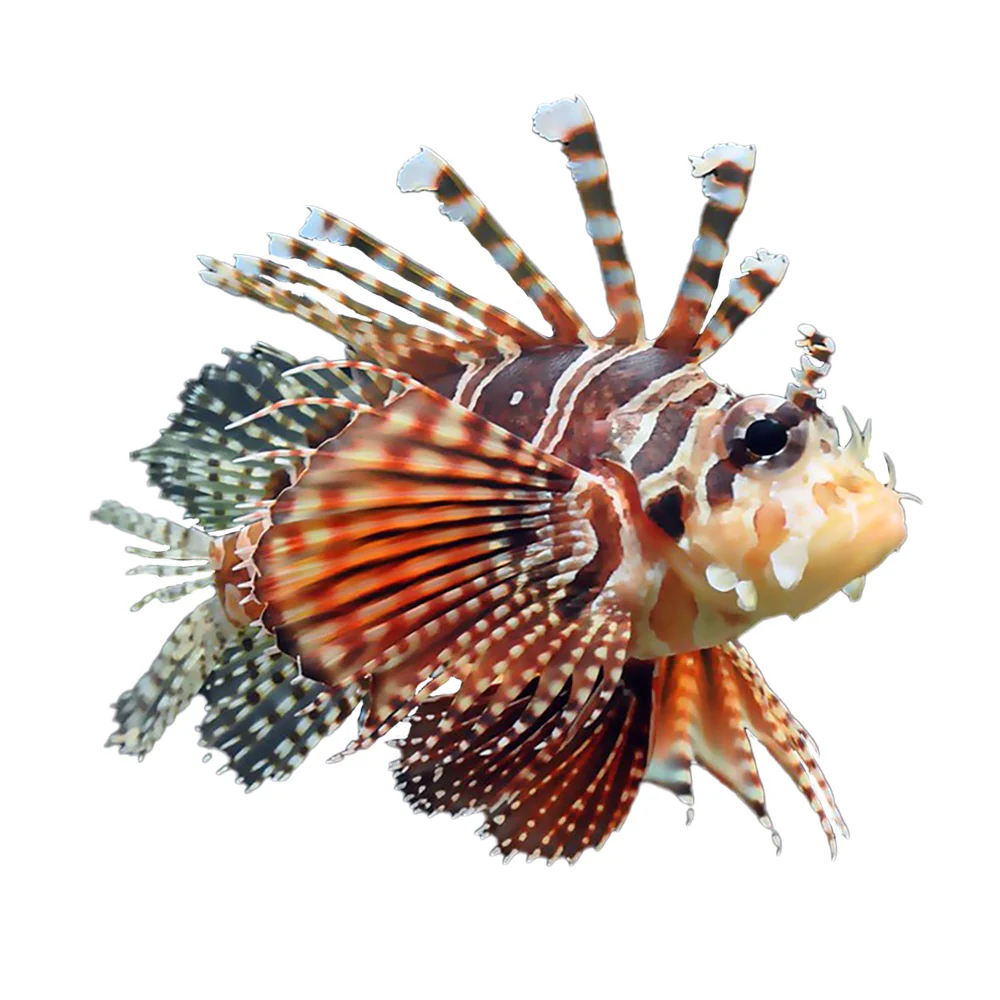
The Pattern: Features distinct, crisp vertical "zebra" stripes in shades of reddish-brown, chocolate, and white.
-
The Pectoral Fins: Its pectoral fins are large and fan-like, with membranes that extend almost to the tips of the rays, resembling a bird's wing.
-
The "Antennae": Look for the small, leafy appendages above the eyes and near the mouth, which help break up its silhouette while hunting.
-
Venomous Spines: Like all lionfish, the dorsal, anal, and pelvic spines are venomous. Handle with extreme caution during tank maintenance.
Behaviour & Tank Compatibility
-
Ambush Predator: This fish spends much of its time hanging upside down under ledges or "hovering" near the rocks. It is a master of patience, waiting for a small fish or shrimp to swim within striking distance.
-
"The Mouth Rule": It is generally peaceful toward other fish, provided they are too large to fit in its mouth. If it can swallow it, it eventually will.
-
Reef Safe (with Caution): It is 100% safe with corals. However, it is not safe with ornamental shrimp or small crabs, which are its natural diet.
-
Tank Mates: Best kept with similarly sized or larger, peaceful-to-semi-aggressive fish. Excellent tank mates include larger Tangs, Angelfish, Foxfaces, and larger Wrasses. Avoid keeping it with aggressive "fin-nippers" (like some Puffers) that might damage its delicate fins.
Ideal Tank Setup
-
Tank Size: A minimum of 115L–150L (30–40 Gallons) for a single specimen.
-
Rockwork: Provide plenty of caves, overhangs, and shaded areas. They naturally prefer to hang out in the shadows during the day.
-
Filtration: Because they are carnivores and eat large meals, they produce a significant biological load. A strong protein skimmer is highly recommended.
-
Flow: They prefer low to moderate flow. Too much turbulence can make it difficult for them to hover comfortably.
Dietary Needs: The Feeding Challenge
The biggest hurdle with Zebra Lionfish is transitioning them from live food to frozen:
-
Initial Diet: New arrivals often require live ghost shrimp or feeder fish to trigger their hunting instinct.
-
The Transition: Use a "feeding stick" to wiggle pieces of frozen mysis, silversides, or krill in front of them to mimic live movement.
-
Feeding Frequency: Adults only need to be fed 3–4 times per week. Overfeeding can lead to fatty liver disease and water quality issues.
Safety Warning
[CAUTION] The spines of the Zebra Lionfish are highly venomous. A sting causes intense pain, swelling, and in some cases, a severe allergic reaction. If stung, soak the area in the hottest water you can tolerate (without burning skin) to break down the protein-based venom, and seek medical attention if symptoms worsen.
Why Choose the Zebra Lionfish?
The Zebra Lionfish is for the hobbyist who wants a "showstopper" with a big personality. They are incredibly intelligent and often learn to "beg" for food when their owner approaches the tank. If you have a reef with larger inhabitants and no small shrimp, the Zebra Lionfish adds a level of exotic drama that few other fish can provide.
Dwarf Zebra Lionfish (Dendrochirus zebra)
The Dwarf Zebra Lionfish is the perfect compromise for hobbyists who want the exotic, "prehistoric" look of a lionfish without the massive size of the Pterois species. It is a stunning ambush predator that carries the same majestic fins and venomous spines as its larger cousins but remains manageable for medium-sized aquariums.
Key Information
-
Common Names: Dwarf Zebra Lionfish, Zebra Turkeyfish
-
Scientific Name: Dendrochirus zebra
-
Origin: Indo-Pacific (Red Sea to Australia and Indonesia)
-
Max Size: 18–20 cm (approx. 7 inches)
-
Lifespan: 10+ years
-
Temperament: Semi-aggressive (Peaceful toward fish it cannot swallow)
-
Diet: Carnivore – Ambush predator
-
Care Level: Moderate
Appearance & Identification
The Zebra Lionfish is often confused with the Fu Manchu or Dwarf Fuzzy Lionfish. Here is how to spot the Zebra:
-
The Pattern: Features distinct, crisp vertical "zebra" stripes in shades of reddish-brown, chocolate, and white.
-
The Pectoral Fins: Its pectoral fins are large and fan-like, with membranes that extend almost to the tips of the rays, resembling a bird's wing.
-
The "Antennae": Look for the small, leafy appendages above the eyes and near the mouth, which help break up its silhouette while hunting.
-
Venomous Spines: Like all lionfish, the dorsal, anal, and pelvic spines are venomous. Handle with extreme caution during tank maintenance.
Behaviour & Tank Compatibility
-
Ambush Predator: This fish spends much of its time hanging upside down under ledges or "hovering" near the rocks. It is a master of patience, waiting for a small fish or shrimp to swim within striking distance.
-
"The Mouth Rule": It is generally peaceful toward other fish, provided they are too large to fit in its mouth. If it can swallow it, it eventually will.
-
Reef Safe (with Caution): It is 100% safe with corals. However, it is not safe with ornamental shrimp or small crabs, which are its natural diet.
-
Tank Mates: Best kept with similarly sized or larger, peaceful-to-semi-aggressive fish. Excellent tank mates include larger Tangs, Angelfish, Foxfaces, and larger Wrasses. Avoid keeping it with aggressive "fin-nippers" (like some Puffers) that might damage its delicate fins.
Ideal Tank Setup
-
Tank Size: A minimum of 115L–150L (30–40 Gallons) for a single specimen.
-
Rockwork: Provide plenty of caves, overhangs, and shaded areas. They naturally prefer to hang out in the shadows during the day.
-
Filtration: Because they are carnivores and eat large meals, they produce a significant biological load. A strong protein skimmer is highly recommended.
-
Flow: They prefer low to moderate flow. Too much turbulence can make it difficult for them to hover comfortably.
Dietary Needs: The Feeding Challenge
The biggest hurdle with Zebra Lionfish is transitioning them from live food to frozen:
-
Initial Diet: New arrivals often require live ghost shrimp or feeder fish to trigger their hunting instinct.
-
The Transition: Use a "feeding stick" to wiggle pieces of frozen mysis, silversides, or krill in front of them to mimic live movement.
-
Feeding Frequency: Adults only need to be fed 3–4 times per week. Overfeeding can lead to fatty liver disease and water quality issues.
Safety Warning
[CAUTION] The spines of the Zebra Lionfish are highly venomous. A sting causes intense pain, swelling, and in some cases, a severe allergic reaction. If stung, soak the area in the hottest water you can tolerate (without burning skin) to break down the protein-based venom, and seek medical attention if symptoms worsen.
Why Choose the Zebra Lionfish?
The Zebra Lionfish is for the hobbyist who wants a "showstopper" with a big personality. They are incredibly intelligent and often learn to "beg" for food when their owner approaches the tank. If you have a reef with larger inhabitants and no small shrimp, the Zebra Lionfish adds a level of exotic drama that few other fish can provide.
Description
Dwarf Zebra Lionfish (Dendrochirus zebra)
The Dwarf Zebra Lionfish is the perfect compromise for hobbyists who want the exotic, "prehistoric" look of a lionfish without the massive size of the Pterois species. It is a stunning ambush predator that carries the same majestic fins and venomous spines as its larger cousins but remains manageable for medium-sized aquariums.
Key Information
-
Common Names: Dwarf Zebra Lionfish, Zebra Turkeyfish
-
Scientific Name: Dendrochirus zebra
-
Origin: Indo-Pacific (Red Sea to Australia and Indonesia)
-
Max Size: 18–20 cm (approx. 7 inches)
-
Lifespan: 10+ years
-
Temperament: Semi-aggressive (Peaceful toward fish it cannot swallow)
-
Diet: Carnivore – Ambush predator
-
Care Level: Moderate
Appearance & Identification
The Zebra Lionfish is often confused with the Fu Manchu or Dwarf Fuzzy Lionfish. Here is how to spot the Zebra:
-
The Pattern: Features distinct, crisp vertical "zebra" stripes in shades of reddish-brown, chocolate, and white.
-
The Pectoral Fins: Its pectoral fins are large and fan-like, with membranes that extend almost to the tips of the rays, resembling a bird's wing.
-
The "Antennae": Look for the small, leafy appendages above the eyes and near the mouth, which help break up its silhouette while hunting.
-
Venomous Spines: Like all lionfish, the dorsal, anal, and pelvic spines are venomous. Handle with extreme caution during tank maintenance.
Behaviour & Tank Compatibility
-
Ambush Predator: This fish spends much of its time hanging upside down under ledges or "hovering" near the rocks. It is a master of patience, waiting for a small fish or shrimp to swim within striking distance.
-
"The Mouth Rule": It is generally peaceful toward other fish, provided they are too large to fit in its mouth. If it can swallow it, it eventually will.
-
Reef Safe (with Caution): It is 100% safe with corals. However, it is not safe with ornamental shrimp or small crabs, which are its natural diet.
-
Tank Mates: Best kept with similarly sized or larger, peaceful-to-semi-aggressive fish. Excellent tank mates include larger Tangs, Angelfish, Foxfaces, and larger Wrasses. Avoid keeping it with aggressive "fin-nippers" (like some Puffers) that might damage its delicate fins.
Ideal Tank Setup
-
Tank Size: A minimum of 115L–150L (30–40 Gallons) for a single specimen.
-
Rockwork: Provide plenty of caves, overhangs, and shaded areas. They naturally prefer to hang out in the shadows during the day.
-
Filtration: Because they are carnivores and eat large meals, they produce a significant biological load. A strong protein skimmer is highly recommended.
-
Flow: They prefer low to moderate flow. Too much turbulence can make it difficult for them to hover comfortably.
Dietary Needs: The Feeding Challenge
The biggest hurdle with Zebra Lionfish is transitioning them from live food to frozen:
-
Initial Diet: New arrivals often require live ghost shrimp or feeder fish to trigger their hunting instinct.
-
The Transition: Use a "feeding stick" to wiggle pieces of frozen mysis, silversides, or krill in front of them to mimic live movement.
-
Feeding Frequency: Adults only need to be fed 3–4 times per week. Overfeeding can lead to fatty liver disease and water quality issues.
Safety Warning
[CAUTION] The spines of the Zebra Lionfish are highly venomous. A sting causes intense pain, swelling, and in some cases, a severe allergic reaction. If stung, soak the area in the hottest water you can tolerate (without burning skin) to break down the protein-based venom, and seek medical attention if symptoms worsen.
Why Choose the Zebra Lionfish?
The Zebra Lionfish is for the hobbyist who wants a "showstopper" with a big personality. They are incredibly intelligent and often learn to "beg" for food when their owner approaches the tank. If you have a reef with larger inhabitants and no small shrimp, the Zebra Lionfish adds a level of exotic drama that few other fish can provide.