Lemon Damselfish (Pomacentrus moluccensis)
Lemon Damselfish (Pomacentrus moluccensis)
The Lemon Damselfish, often called the Molucca Damselfish, is a "gold standard" for hobbyists seeking a splash of pure, neon-yellow color. While many damselfish are notorious for their aggression, the Lemon Damselfish is generally considered one of the more peaceful members of the family, especially when compared to the "Devil" species. They are incredibly hardy, making them an excellent choice for both beginners and experienced reefers.
Key Information
-
Common Names: Lemon Damselfish, Molucca Damsel, Golden Damselfish
-
Scientific Name: Pomacentrus moluccensis
-
Origin: Western Pacific (Indonesia to the Philippines, north to Japan)
-
Max Size: 9 cm (approx. 3.5 inches)
-
Lifespan: 5–8 years
-
Temperament: Semi-aggressive; territorial but manageable
-
Diet: Omnivore – Feeds on algae and zooplankton
-
Care Level: Very Easy
Appearance & Identification
The Lemon Damselfish is the epitome of "simple but effective" design:
-
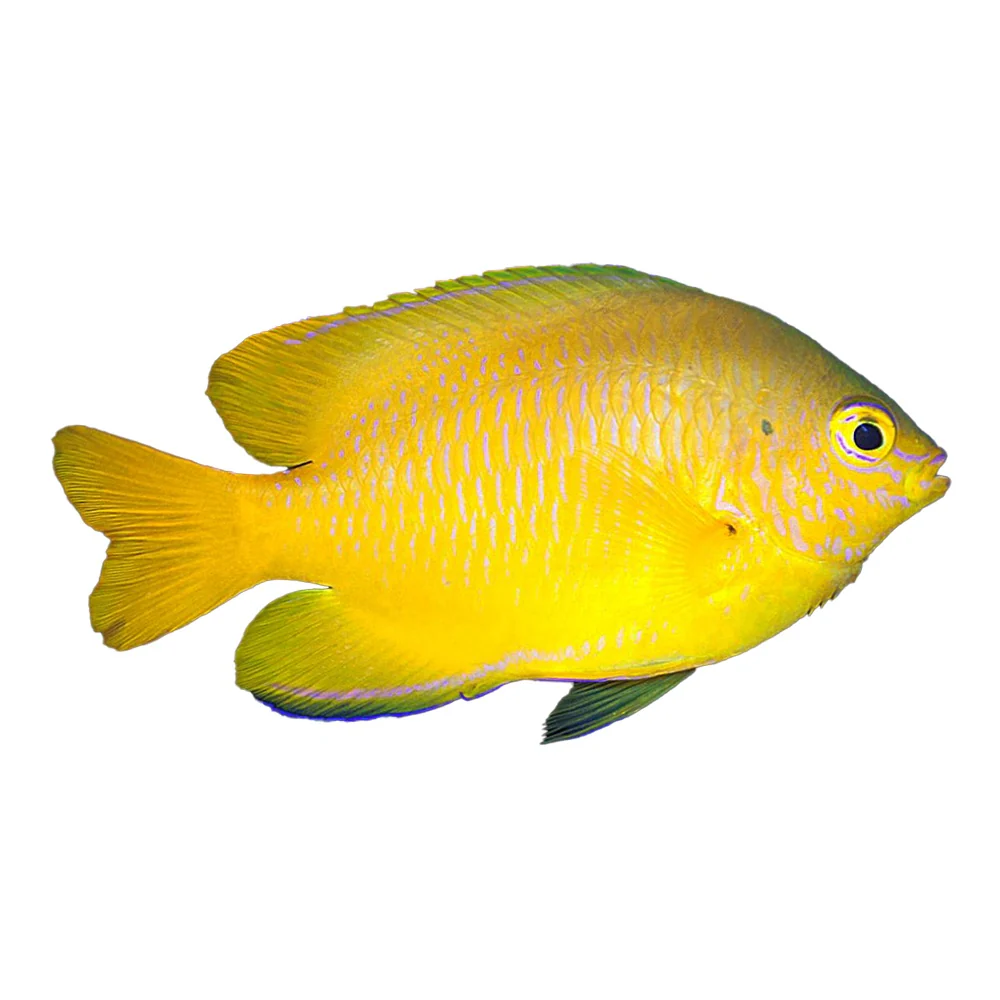
Coloration: A uniform, solid vibrant yellow from snout to tail.
-
The "Black Spot": They often feature a tiny, distinct black speck at the base of the pectoral fin and sometimes another at the rear of the dorsal fin.
-
Eyes: Features a bright yellow iris that blends seamlessly into the body color.
-
Form: It has a classic, oval-shaped body that is slightly more elongated than the chunky Dascyllus damsels.
Behaviour & Tank Compatibility
-
Territoriality: While peaceful compared to other damsels, they are still territorial. They will select a favorite "perch" or crevice in the rockwork and defend it.
-
Social Structure: In the wild, they are often found in groups among branching corals (Acropora). In an aquarium, they can be kept in small groups if added simultaneously to a large tank (285L+). In smaller tanks, it is best to keep only one.
-
Reef Safe: 100% Reef Safe. They are particularly fond of hovering near branching corals, which they use as a quick retreat if they feel threatened.
-
Tank Mates: They get along well with Tangs, Wrasses, and Clownfish. Avoid keeping them with very timid fish like small gobies in a tiny tank, as the damsel may claim the entire space.
Ideal Tank Setup
-
Tank Size: A minimum of 75L (20 Gallons) for a single fish. For a group, a 200L (55 Gallon) tank or larger is recommended.
-
Rockwork: Provide plenty of live rock with branching structures or tight caves. This fish loves to "dart" in and out of the aquascape.
-
Water Quality: Like most damsels, they are incredibly resilient to fluctuations in water quality, but they thrive best in standard reef conditions.
-
Feeding: Not picky at all. They will readily accept frozen mysis, brine shrimp, high-quality flakes, and pellets. They also appreciate some vegetable matter (spirulina) in their diet.
Why Choose the Lemon Damselfish?
The Lemon Damselfish is for the hobbyist who wants high-impact color without high-impact stress. Unlike the Yellow Tang, which requires a massive tank, the Lemon Damselfish provides that same "pop" of yellow in a much smaller footprint. They are active, visible, and provide a constant sense of movement in the mid-water column.
Lemon Damselfish (Pomacentrus moluccensis)
The Lemon Damselfish, often called the Molucca Damselfish, is a "gold standard" for hobbyists seeking a splash of pure, neon-yellow color. While many damselfish are notorious for their aggression, the Lemon Damselfish is generally considered one of the more peaceful members of the family, especially when compared to the "Devil" species. They are incredibly hardy, making them an excellent choice for both beginners and experienced reefers.
Key Information
-
Common Names: Lemon Damselfish, Molucca Damsel, Golden Damselfish
-
Scientific Name: Pomacentrus moluccensis
-
Origin: Western Pacific (Indonesia to the Philippines, north to Japan)
-
Max Size: 9 cm (approx. 3.5 inches)
-
Lifespan: 5–8 years
-
Temperament: Semi-aggressive; territorial but manageable
-
Diet: Omnivore – Feeds on algae and zooplankton
-
Care Level: Very Easy
Appearance & Identification
The Lemon Damselfish is the epitome of "simple but effective" design:
-
Coloration: A uniform, solid vibrant yellow from snout to tail.
-
The "Black Spot": They often feature a tiny, distinct black speck at the base of the pectoral fin and sometimes another at the rear of the dorsal fin.
-
Eyes: Features a bright yellow iris that blends seamlessly into the body color.
-
Form: It has a classic, oval-shaped body that is slightly more elongated than the chunky Dascyllus damsels.
Behaviour & Tank Compatibility
-
Territoriality: While peaceful compared to other damsels, they are still territorial. They will select a favorite "perch" or crevice in the rockwork and defend it.
-
Social Structure: In the wild, they are often found in groups among branching corals (Acropora). In an aquarium, they can be kept in small groups if added simultaneously to a large tank (285L+). In smaller tanks, it is best to keep only one.
-
Reef Safe: 100% Reef Safe. They are particularly fond of hovering near branching corals, which they use as a quick retreat if they feel threatened.
-
Tank Mates: They get along well with Tangs, Wrasses, and Clownfish. Avoid keeping them with very timid fish like small gobies in a tiny tank, as the damsel may claim the entire space.
Ideal Tank Setup
-
Tank Size: A minimum of 75L (20 Gallons) for a single fish. For a group, a 200L (55 Gallon) tank or larger is recommended.
-
Rockwork: Provide plenty of live rock with branching structures or tight caves. This fish loves to "dart" in and out of the aquascape.
-
Water Quality: Like most damsels, they are incredibly resilient to fluctuations in water quality, but they thrive best in standard reef conditions.
-
Feeding: Not picky at all. They will readily accept frozen mysis, brine shrimp, high-quality flakes, and pellets. They also appreciate some vegetable matter (spirulina) in their diet.
Why Choose the Lemon Damselfish?
The Lemon Damselfish is for the hobbyist who wants high-impact color without high-impact stress. Unlike the Yellow Tang, which requires a massive tank, the Lemon Damselfish provides that same "pop" of yellow in a much smaller footprint. They are active, visible, and provide a constant sense of movement in the mid-water column.
Description
Lemon Damselfish (Pomacentrus moluccensis)
The Lemon Damselfish, often called the Molucca Damselfish, is a "gold standard" for hobbyists seeking a splash of pure, neon-yellow color. While many damselfish are notorious for their aggression, the Lemon Damselfish is generally considered one of the more peaceful members of the family, especially when compared to the "Devil" species. They are incredibly hardy, making them an excellent choice for both beginners and experienced reefers.
Key Information
-
Common Names: Lemon Damselfish, Molucca Damsel, Golden Damselfish
-
Scientific Name: Pomacentrus moluccensis
-
Origin: Western Pacific (Indonesia to the Philippines, north to Japan)
-
Max Size: 9 cm (approx. 3.5 inches)
-
Lifespan: 5–8 years
-
Temperament: Semi-aggressive; territorial but manageable
-
Diet: Omnivore – Feeds on algae and zooplankton
-
Care Level: Very Easy
Appearance & Identification
The Lemon Damselfish is the epitome of "simple but effective" design:
-
Coloration: A uniform, solid vibrant yellow from snout to tail.
-
The "Black Spot": They often feature a tiny, distinct black speck at the base of the pectoral fin and sometimes another at the rear of the dorsal fin.
-
Eyes: Features a bright yellow iris that blends seamlessly into the body color.
-
Form: It has a classic, oval-shaped body that is slightly more elongated than the chunky Dascyllus damsels.
Behaviour & Tank Compatibility
-
Territoriality: While peaceful compared to other damsels, they are still territorial. They will select a favorite "perch" or crevice in the rockwork and defend it.
-
Social Structure: In the wild, they are often found in groups among branching corals (Acropora). In an aquarium, they can be kept in small groups if added simultaneously to a large tank (285L+). In smaller tanks, it is best to keep only one.
-
Reef Safe: 100% Reef Safe. They are particularly fond of hovering near branching corals, which they use as a quick retreat if they feel threatened.
-
Tank Mates: They get along well with Tangs, Wrasses, and Clownfish. Avoid keeping them with very timid fish like small gobies in a tiny tank, as the damsel may claim the entire space.
Ideal Tank Setup
-
Tank Size: A minimum of 75L (20 Gallons) for a single fish. For a group, a 200L (55 Gallon) tank or larger is recommended.
-
Rockwork: Provide plenty of live rock with branching structures or tight caves. This fish loves to "dart" in and out of the aquascape.
-
Water Quality: Like most damsels, they are incredibly resilient to fluctuations in water quality, but they thrive best in standard reef conditions.
-
Feeding: Not picky at all. They will readily accept frozen mysis, brine shrimp, high-quality flakes, and pellets. They also appreciate some vegetable matter (spirulina) in their diet.
Why Choose the Lemon Damselfish?
The Lemon Damselfish is for the hobbyist who wants high-impact color without high-impact stress. Unlike the Yellow Tang, which requires a massive tank, the Lemon Damselfish provides that same "pop" of yellow in a much smaller footprint. They are active, visible, and provide a constant sense of movement in the mid-water column.