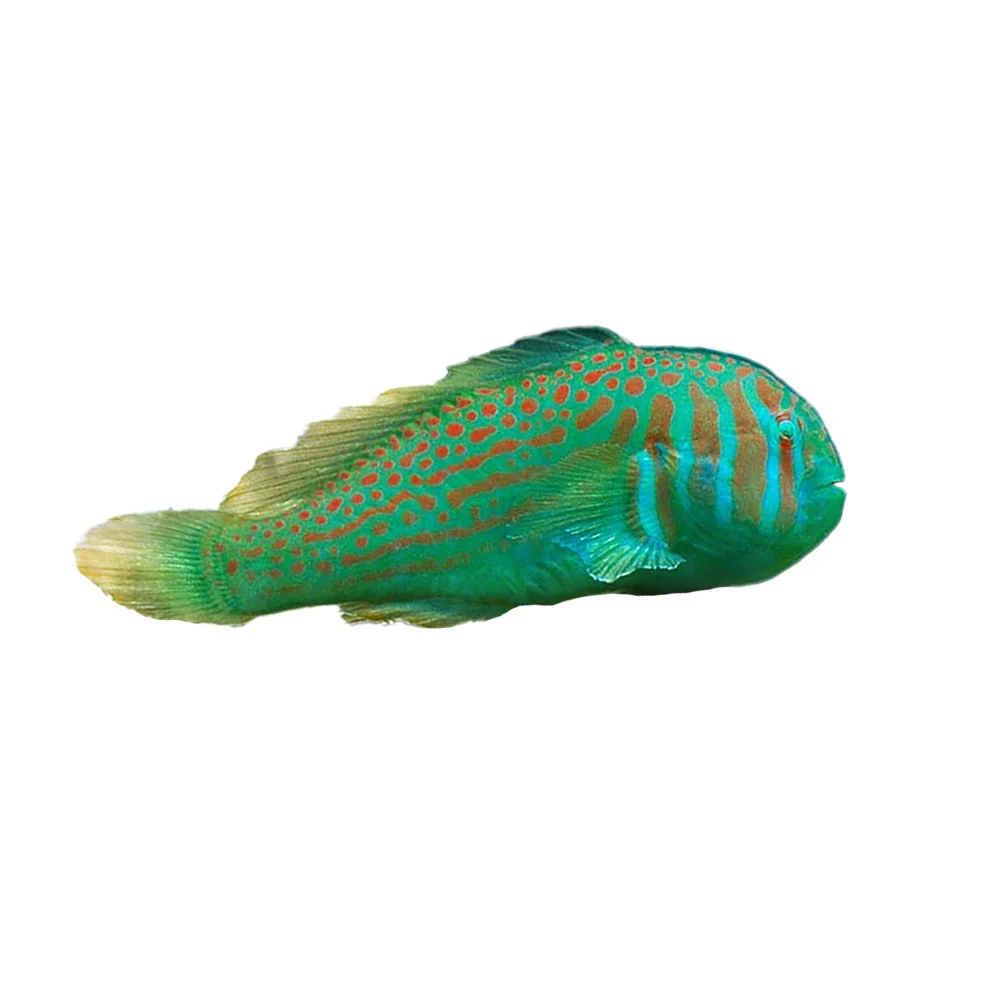
Green Clown Coral Goby (Gobiodon Histrio)
Green Clown Goby (Gobiodon histrio)
The Green Clown Goby, also known as the Broad-barred Coral Goby, is a tiny, charismatic resident of the reef. Similar to the Citron Goby you asked about earlier, this species belongs to the genus Gobiodon and is a dedicated "coral dweller." It is prized for its intricate, "painted" appearance and its bold personality, often acting as the tiny "king" of its favorite coral colony.
Key Information
-
Common Names: Green Clown Goby, Broad-barred Coral Goby, Warpaint Goby
-
Scientific Name: Gobiodon histrio
-
Origin: Indo-Pacific (Red Sea to the Great Barrier Reef)
-
Max Size: 3.5 cm (approx. 1.4 inches) — one of the smallest reef fish.
-
Lifespan: 2–4 years
-
Temperament: Peaceful; but territorial toward other Gobiodon
-
Diet: Carnivore – Small meaty foods
-
Care Level: Easy
Appearance & Identification
The Green Clown Goby looks like it has been decorated with tribal "war paint":
-
Base Color: A smooth, matte pale green to lime green.
-
The Markings: Features several vertical red or pinkish-orange bars on the head and horizontal broken lines/spots across the body.
-
Size: It is significantly smaller and more "squat" than the Citron Goby.
-
Toxic Skin: Like its cousins, it produces a bitter, toxic mucus that makes it unpalatable to most predators.
Behaviour & Tank Compatibility
-
The Percher: Lacking a swim bladder, it spends its day "sitting" on coral branches or rock ledges. It uses its fused pelvic fins as a suction cup to stay anchored in high-flow areas.
-
Coral Hosting: In the wild, they are almost always found within stony corals (SPS), specifically Acropora.
-
Reef Safe (with Caution): While safe with most inhabitants, they may nip at the polyps of the coral they reside in to clear a spot for eggs. In a small tank with a single coral, this can be stressful; in a larger reef, the coral usually grows faster than the goby can nip.
-
Social Structure: Keep singly or as a mated pair. They will aggressively chase away other clown gobies that try to sit on their specific coral "throne."
-
Tank Mates: Excellent for nano and pico reefs. Safe with shrimp, snails, and peaceful fish. Avoid large, predatory fish that might ignore the "bad taste" and try to swallow them.
Ideal Tank Setup
-
Tank Size: Perfect for tiny systems; a minimum of 20L–40L (5–10 Gallons) is plenty.
-
Rockwork & Corals: They are most happy when provided with branching SPS corals or "branchy" live rock. They love to wedge themselves deep into the branches where they feel secure.
-
Flow: They handle moderate flow very well, as they are built to live in the high-energy surge zones of the reef crest.
-
Feeding: They are "ambush" planktivores. They wait for food to drift by and then dart out to grab it. Feed 2 times daily with frozen cyclops, baby mysis, or oyster eggs.
Why Choose the Green Clown Goby?
The Green Clown Goby is for the hobbyist who appreciates the small details. It is a "hidden gem" that you have to look closely to find, but once you spot it perching on a coral branch, its "warpaint" face and grumpy expression are incredibly endearing. It is a hardy, fascinating, and low-impact addition that brings a specialized bit of reef ecology into your home.
Green Clown Goby (Gobiodon histrio)
The Green Clown Goby, also known as the Broad-barred Coral Goby, is a tiny, charismatic resident of the reef. Similar to the Citron Goby you asked about earlier, this species belongs to the genus Gobiodon and is a dedicated "coral dweller." It is prized for its intricate, "painted" appearance and its bold personality, often acting as the tiny "king" of its favorite coral colony.
Key Information
-
Common Names: Green Clown Goby, Broad-barred Coral Goby, Warpaint Goby
-
Scientific Name: Gobiodon histrio
-
Origin: Indo-Pacific (Red Sea to the Great Barrier Reef)
-
Max Size: 3.5 cm (approx. 1.4 inches) — one of the smallest reef fish.
-
Lifespan: 2–4 years
-
Temperament: Peaceful; but territorial toward other Gobiodon
-
Diet: Carnivore – Small meaty foods
-
Care Level: Easy
Appearance & Identification
The Green Clown Goby looks like it has been decorated with tribal "war paint":
-
Base Color: A smooth, matte pale green to lime green.
-
The Markings: Features several vertical red or pinkish-orange bars on the head and horizontal broken lines/spots across the body.
-
Size: It is significantly smaller and more "squat" than the Citron Goby.
-
Toxic Skin: Like its cousins, it produces a bitter, toxic mucus that makes it unpalatable to most predators.
Behaviour & Tank Compatibility
-
The Percher: Lacking a swim bladder, it spends its day "sitting" on coral branches or rock ledges. It uses its fused pelvic fins as a suction cup to stay anchored in high-flow areas.
-
Coral Hosting: In the wild, they are almost always found within stony corals (SPS), specifically Acropora.
-
Reef Safe (with Caution): While safe with most inhabitants, they may nip at the polyps of the coral they reside in to clear a spot for eggs. In a small tank with a single coral, this can be stressful; in a larger reef, the coral usually grows faster than the goby can nip.
-
Social Structure: Keep singly or as a mated pair. They will aggressively chase away other clown gobies that try to sit on their specific coral "throne."
-
Tank Mates: Excellent for nano and pico reefs. Safe with shrimp, snails, and peaceful fish. Avoid large, predatory fish that might ignore the "bad taste" and try to swallow them.
Ideal Tank Setup
-
Tank Size: Perfect for tiny systems; a minimum of 20L–40L (5–10 Gallons) is plenty.
-
Rockwork & Corals: They are most happy when provided with branching SPS corals or "branchy" live rock. They love to wedge themselves deep into the branches where they feel secure.
-
Flow: They handle moderate flow very well, as they are built to live in the high-energy surge zones of the reef crest.
-
Feeding: They are "ambush" planktivores. They wait for food to drift by and then dart out to grab it. Feed 2 times daily with frozen cyclops, baby mysis, or oyster eggs.
Why Choose the Green Clown Goby?
The Green Clown Goby is for the hobbyist who appreciates the small details. It is a "hidden gem" that you have to look closely to find, but once you spot it perching on a coral branch, its "warpaint" face and grumpy expression are incredibly endearing. It is a hardy, fascinating, and low-impact addition that brings a specialized bit of reef ecology into your home.
Description
Green Clown Goby (Gobiodon histrio)
The Green Clown Goby, also known as the Broad-barred Coral Goby, is a tiny, charismatic resident of the reef. Similar to the Citron Goby you asked about earlier, this species belongs to the genus Gobiodon and is a dedicated "coral dweller." It is prized for its intricate, "painted" appearance and its bold personality, often acting as the tiny "king" of its favorite coral colony.
Key Information
-
Common Names: Green Clown Goby, Broad-barred Coral Goby, Warpaint Goby
-
Scientific Name: Gobiodon histrio
-
Origin: Indo-Pacific (Red Sea to the Great Barrier Reef)
-
Max Size: 3.5 cm (approx. 1.4 inches) — one of the smallest reef fish.
-
Lifespan: 2–4 years
-
Temperament: Peaceful; but territorial toward other Gobiodon
-
Diet: Carnivore – Small meaty foods
-
Care Level: Easy
Appearance & Identification
The Green Clown Goby looks like it has been decorated with tribal "war paint":
-
Base Color: A smooth, matte pale green to lime green.
-
The Markings: Features several vertical red or pinkish-orange bars on the head and horizontal broken lines/spots across the body.
-
Size: It is significantly smaller and more "squat" than the Citron Goby.
-
Toxic Skin: Like its cousins, it produces a bitter, toxic mucus that makes it unpalatable to most predators.
Behaviour & Tank Compatibility
-
The Percher: Lacking a swim bladder, it spends its day "sitting" on coral branches or rock ledges. It uses its fused pelvic fins as a suction cup to stay anchored in high-flow areas.
-
Coral Hosting: In the wild, they are almost always found within stony corals (SPS), specifically Acropora.
-
Reef Safe (with Caution): While safe with most inhabitants, they may nip at the polyps of the coral they reside in to clear a spot for eggs. In a small tank with a single coral, this can be stressful; in a larger reef, the coral usually grows faster than the goby can nip.
-
Social Structure: Keep singly or as a mated pair. They will aggressively chase away other clown gobies that try to sit on their specific coral "throne."
-
Tank Mates: Excellent for nano and pico reefs. Safe with shrimp, snails, and peaceful fish. Avoid large, predatory fish that might ignore the "bad taste" and try to swallow them.
Ideal Tank Setup
-
Tank Size: Perfect for tiny systems; a minimum of 20L–40L (5–10 Gallons) is plenty.
-
Rockwork & Corals: They are most happy when provided with branching SPS corals or "branchy" live rock. They love to wedge themselves deep into the branches where they feel secure.
-
Flow: They handle moderate flow very well, as they are built to live in the high-energy surge zones of the reef crest.
-
Feeding: They are "ambush" planktivores. They wait for food to drift by and then dart out to grab it. Feed 2 times daily with frozen cyclops, baby mysis, or oyster eggs.
Why Choose the Green Clown Goby?
The Green Clown Goby is for the hobbyist who appreciates the small details. It is a "hidden gem" that you have to look closely to find, but once you spot it perching on a coral branch, its "warpaint" face and grumpy expression are incredibly endearing. It is a hardy, fascinating, and low-impact addition that brings a specialized bit of reef ecology into your home.