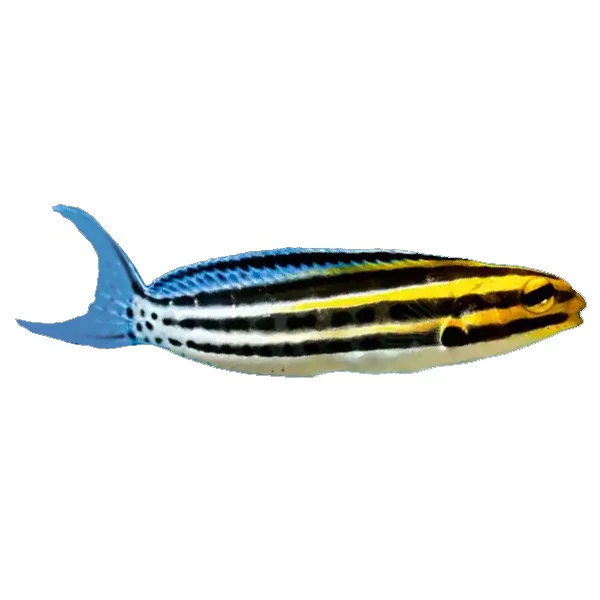
Blenny Striped (Meiacanthus Grammistes)
Striped Fang Blenny (Meiacanthus grammistes)
The Striped Fang Blenny, also known as the Striped Harptail Blenny, is a popular and hardy species in the marine hobby. As a "Fang Blenny," it possesses a swim bladder that allows it to hover in the water column, making it much more visible than bottom-dwelling blennies. It is famous for its bold, horizontal stripes and its unique venomous self-defense mechanism.
Key Information
-
Common Names: Striped Fang Blenny, Striped Harptail Blenny, Grammar Blenny
-
Scientific Name: Meiacanthus grammistes
-
Origin: Western Pacific (Indonesia to Papua New Guinea, north to Japan)
-
Max Size: 10–12 cm (approx. 4–5 inches)
-
Lifespan: 5–8 years
-
Temperament: Peaceful (but bold due to its defense)
-
Diet: Omnivore – Requires meaty foods like mysis and brine shrimp, plus marine algae
-
Care Level: Easy
Appearance & Identification
The Striped Fang Blenny has a very graphic and clean aesthetic:
-
Pattern: Features three distinct dark brown-to-black horizontal stripes that run the entire length of its cream-colored or pale yellow body.
-
Fins: The dorsal and anal fins often have a yellow tint and are edged with black dots or a solid black line.
-
Lyretail: Adults develop elegant, elongated filaments on their tail, giving them a "harptail" or "lyretail" appearance.
Behavior & Tank Compatibility
-
Venomous Defense: It has two large, venomous canine teeth in its lower jaw. It only uses these for defense (e.g., if a larger fish tries to eat it). Because of this, even aggressive predators often learn to leave the Striped Blenny alone.
-
Dither Fish: Because it is not afraid of being eaten, it swims openly. This helps timid fish feel safe, signaling that no predators are currently nearby.
-
Reef Safe: 100% Reef Safe. It will not nip at corals or clams.
-
Tank Mates: Excellent for community tanks with Tangs, Wrasses, and Clownfish. Avoid keeping it with other Meiacanthus species unless you have a very large tank, as they can be territorial toward similar-looking blennies.
Ideal Tank Setup
-
Tank Size: A minimum of 115L (30 Gallons) is recommended.
-
Rockwork: While they spend time in the open, they need caves and crevices to retreat to at night or when resting.
-
Lid: Like all blennies, they are expert jumpers. A tight-fitting lid or mesh screen is mandatory.
-
Flow: They prefer moderate water movement and are strong enough swimmers to handle typical reef currents.
Striped Fang Blenny (Meiacanthus grammistes)
The Striped Fang Blenny, also known as the Striped Harptail Blenny, is a popular and hardy species in the marine hobby. As a "Fang Blenny," it possesses a swim bladder that allows it to hover in the water column, making it much more visible than bottom-dwelling blennies. It is famous for its bold, horizontal stripes and its unique venomous self-defense mechanism.
Key Information
-
Common Names: Striped Fang Blenny, Striped Harptail Blenny, Grammar Blenny
-
Scientific Name: Meiacanthus grammistes
-
Origin: Western Pacific (Indonesia to Papua New Guinea, north to Japan)
-
Max Size: 10–12 cm (approx. 4–5 inches)
-
Lifespan: 5–8 years
-
Temperament: Peaceful (but bold due to its defense)
-
Diet: Omnivore – Requires meaty foods like mysis and brine shrimp, plus marine algae
-
Care Level: Easy
Appearance & Identification
The Striped Fang Blenny has a very graphic and clean aesthetic:
-
Pattern: Features three distinct dark brown-to-black horizontal stripes that run the entire length of its cream-colored or pale yellow body.
-
Fins: The dorsal and anal fins often have a yellow tint and are edged with black dots or a solid black line.
-
Lyretail: Adults develop elegant, elongated filaments on their tail, giving them a "harptail" or "lyretail" appearance.
Behavior & Tank Compatibility
-
Venomous Defense: It has two large, venomous canine teeth in its lower jaw. It only uses these for defense (e.g., if a larger fish tries to eat it). Because of this, even aggressive predators often learn to leave the Striped Blenny alone.
-
Dither Fish: Because it is not afraid of being eaten, it swims openly. This helps timid fish feel safe, signaling that no predators are currently nearby.
-
Reef Safe: 100% Reef Safe. It will not nip at corals or clams.
-
Tank Mates: Excellent for community tanks with Tangs, Wrasses, and Clownfish. Avoid keeping it with other Meiacanthus species unless you have a very large tank, as they can be territorial toward similar-looking blennies.
Ideal Tank Setup
-
Tank Size: A minimum of 115L (30 Gallons) is recommended.
-
Rockwork: While they spend time in the open, they need caves and crevices to retreat to at night or when resting.
-
Lid: Like all blennies, they are expert jumpers. A tight-fitting lid or mesh screen is mandatory.
-
Flow: They prefer moderate water movement and are strong enough swimmers to handle typical reef currents.
Original: $46.46
-65%$46.46
$16.26Description
Striped Fang Blenny (Meiacanthus grammistes)
The Striped Fang Blenny, also known as the Striped Harptail Blenny, is a popular and hardy species in the marine hobby. As a "Fang Blenny," it possesses a swim bladder that allows it to hover in the water column, making it much more visible than bottom-dwelling blennies. It is famous for its bold, horizontal stripes and its unique venomous self-defense mechanism.
Key Information
-
Common Names: Striped Fang Blenny, Striped Harptail Blenny, Grammar Blenny
-
Scientific Name: Meiacanthus grammistes
-
Origin: Western Pacific (Indonesia to Papua New Guinea, north to Japan)
-
Max Size: 10–12 cm (approx. 4–5 inches)
-
Lifespan: 5–8 years
-
Temperament: Peaceful (but bold due to its defense)
-
Diet: Omnivore – Requires meaty foods like mysis and brine shrimp, plus marine algae
-
Care Level: Easy
Appearance & Identification
The Striped Fang Blenny has a very graphic and clean aesthetic:
-
Pattern: Features three distinct dark brown-to-black horizontal stripes that run the entire length of its cream-colored or pale yellow body.
-
Fins: The dorsal and anal fins often have a yellow tint and are edged with black dots or a solid black line.
-
Lyretail: Adults develop elegant, elongated filaments on their tail, giving them a "harptail" or "lyretail" appearance.
Behavior & Tank Compatibility
-
Venomous Defense: It has two large, venomous canine teeth in its lower jaw. It only uses these for defense (e.g., if a larger fish tries to eat it). Because of this, even aggressive predators often learn to leave the Striped Blenny alone.
-
Dither Fish: Because it is not afraid of being eaten, it swims openly. This helps timid fish feel safe, signaling that no predators are currently nearby.
-
Reef Safe: 100% Reef Safe. It will not nip at corals or clams.
-
Tank Mates: Excellent for community tanks with Tangs, Wrasses, and Clownfish. Avoid keeping it with other Meiacanthus species unless you have a very large tank, as they can be territorial toward similar-looking blennies.
Ideal Tank Setup
-
Tank Size: A minimum of 115L (30 Gallons) is recommended.
-
Rockwork: While they spend time in the open, they need caves and crevices to retreat to at night or when resting.
-
Lid: Like all blennies, they are expert jumpers. A tight-fitting lid or mesh screen is mandatory.
-
Flow: They prefer moderate water movement and are strong enough swimmers to handle typical reef currents.